
EN

Reasons for Prohibiting Wet Sandblasting in Gas Cylinder Interior Cleaning
December 16, 2025
Reasons for Prohibiting Wet Sandblasting in Gas Cylinder Interior Cleaning
Q: Why is wet sandblasting strictly prohibited for cleaning gas cylinder interiors?
✅️ A: The "Choke Point" Risk – Efficiency Meets Physics
While wet sandblasting is highly effective for open surfaces, it becomes a liability when applied to the constrained geometry of a gas cylinder. The primary reason is the structural bottleneck created by the narrow cylinder neck.
⚠️ The Clogging Crisis: When moisture mixes with abrasive media inside a cylinder, it creates a thick, viscous slurry. Due to surface tension and the "bridging effect," this mixture frequently clogs the narrow neck during the drainage phase.
⚠️ The Extraction Failure: Unlike dry media that flows freely, wet sand becomes trapped. It is nearly impossible to fully evacuate this sludge through the small opening, directly defeating the initial goal of achieving a clean, debris-free interior.
⚠️ The Hidden Threat: Any residual moisture or sand trapped behind the "plug" triggers rapid internal corrosion and potential contamination of the gas medium, compromising the structural integrity of the cylinder.
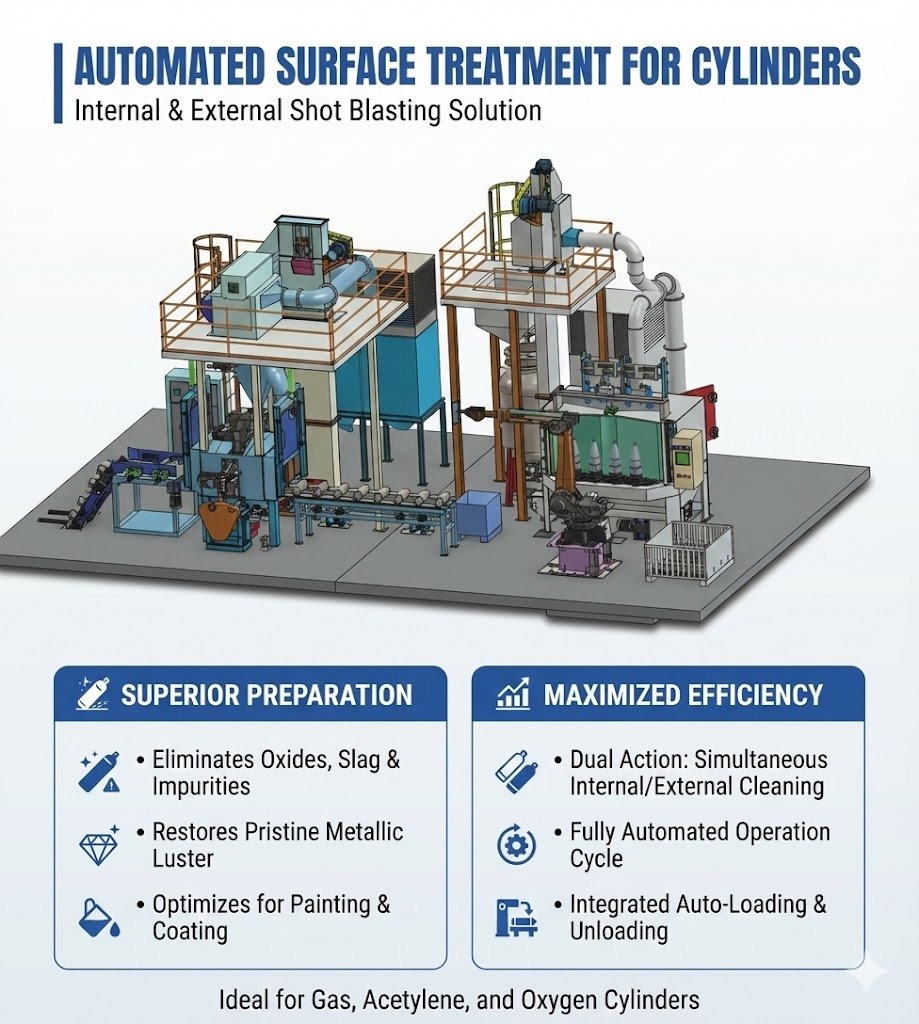
✅️The Professional Standard: To ensure safety and a 100% clean finish, we recommend Dry Abrasive Blasting paired with high-efficiency vacuum extraction or Chemical Pickling for internal surface preparation.
Consultation on the article